
Call Me: 713-252-2100
Sugar Land TX Realtor | 25 Years Local Knowledge | Shelley Stone
Expert guidance for buying and selling homes in Sugar Land from The Shelley Stone Group. Looking to buy or sell in Sugar Land? You need an agent who knows this city inside and out—not just the neighborhoods on everyone's radar, but the hidden gems, the market shifts, and what actually makes a home sell fast here. I'm Shelley Stone, and after more than 25 years living in and knowing Fort Bend County firsthand, I bring deep local knowledge of Sugar Land, Sienna, and the surrounding communities to every real estate decision.
Why Sugar Land, Texas? A City That Keeps Getting Better
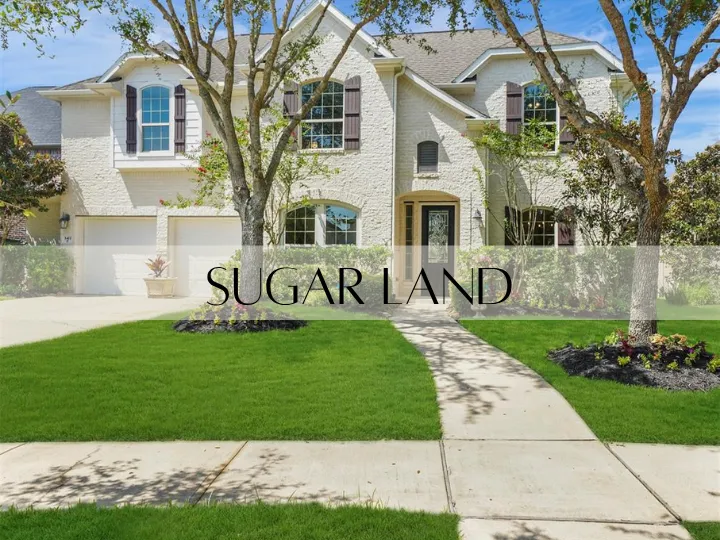
Sugar Land isn’t just growing—it’s thriving with purpose. Recently ranked #3 nationally for livability, this Fort Bend County city stands out for its established neighborhoods, employment base, healthcare access, shopping, dining, recreation, and wide range of housing options.
Led by Shelley Stone, The Shelley Stone Group provides clear guidance, strategic marketing, and steady communication for buyers and sellers navigating the Sugar Land real estate market. With more than 25 years of firsthand Fort Bend County knowledge, I can tell you what rankings don’t always capture about living in Sugar Land: the differences between neighborhoods, locations, amenities, housing styles, and how those details can affect a real estate decision.
Sugar Land is served by Fort Bend ISD and offers major employment centers, healthcare facilities, shopping, dining, and entertainment options like Smart Financial Centre. The city also includes established tree-lined neighborhoods, newer communities, luxury properties, townhomes, and a broad range of price points.
What many relocating buyers don’t realize until they visit is how developed Sugar Land’s commercial infrastructure has become. Sugar Land Town Square functions as a central gathering area with restaurants, events, green space, and offices. First Colony Mall anchors major retail, while Memorial Hermann Sugar Land Hospital and Houston Methodist Sugar Land Hospital provide local healthcare access without requiring a drive into central Houston.
Here’s what I tell out-of-state buyers: Sugar Land gives you a strong mix of neighborhood options, amenities, shopping, dining, healthcare, recreation, and access to Houston. You’re roughly 20 miles from downtown Houston, while still having many of the services and conveniences you use every day close to home.
Sugar Land Neighborhoods: Complete Guide by Area
Sugar Land's strength lies in its neighborhood diversity. Unlike single-developer master-planned communities, Sugar Land evolved through multiple developments across decades, creating distinct areas with different characters, price points, and lifestyle offerings.
First Colony
Typical Price Range: $350,000 - $650,000
Best For: Buyers seeking established neighborhoods, broad housing variety, and convenient amenity access
Size: 10,000 acres with nearly 100 subdivisions
First Colony isn't just a neighborhood—it's essentially a city within Sugar Land spanning 10,000 acres with its own infrastructure, amenities, and commercial centers. Originally developed in the 1970s, First Colony pioneered the master-planned concept that Houston suburbs later replicated throughout the region.
What makes First Colony unique is its maturity and completeness. You have First Colony Mall and Sugar Land Town Square providing shopping, dining, and entertainment within the community. Multiple pools, lakes, walking trails, and parks create year-round recreation options. And the housing variety is exceptional—from starter homes around $350,000 to executive properties approaching $700,000, all within the same master plan.
The subdivision variety within First Colony means buyers can find dramatically different experiences while staying in the same general area. Some sections like Alcorn Bend feature larger executive lots with substantial yard space and privacy. Other areas prioritize walkability and neighborhood parks. Newer phases include more contemporary architecture while established sections offer mature landscaping and traditional layouts.
First Colony's practical advantages include proximity to major employment corridors such as Highway 6, U.S. 59, and the Fort Bend Parkway, access to Fort Bend ISD schools, established community amenities, and decades of residential development and resale activity.
However, First Colony's size creates variance in convenience and desirability. Sections closer to Town Square and major amenities may command different pricing based on location, lot characteristics, property condition, and current buyer demand. Areas near high-traffic corridors may experience more noise. And with nearly 100 subdivisions, buyers need knowledgeable representation to identify which specific sections match their priorities rather than treating "First Colony" as one homogeneous choice.
Sweetwater
Typical Price Range: $850,000 - $3,000,000+
Best For: Buyers seeking luxury homes, golf-course settings, and custom estate properties
Key Feature: Sweetwater Country Club, now TPC Houston
Sweetwater is one of Sugar Land’s most established luxury communities, centered around Sweetwater Country Club, now TPC Houston, and known for custom architecture, larger lots, golf-course settings, lake views, and estate-sized properties.
Homes in Sweetwater are predominantly custom or semi-custom properties, many with golf-course frontage, lake views, or premium lot positions such as cul-de-sacs. Architectural styles range from Mediterranean and French Country to transitional and contemporary designs. Interior features vary by property and may include large kitchens, expansive primary suites, media rooms, wine storage, and outdoor living spaces.
Sweetwater Country Club, now TPC Houston, provides access to golf, dining, tennis, fitness, swimming, and other club amenities. Membership is separate from neighborhood HOA fees and is subject to current club policies, initiation fees, dues, and availability. Buyers interested in club access should verify current membership requirements directly with the club.
One of Sweetwater’s practical advantages is its established location within Sugar Land. The community offers convenient access to Sugar Land Town Square, shopping, healthcare, dining, and major roadways while maintaining a residential setting with mature landscaping and established infrastructure.
Because Sweetwater operates within the luxury segment of the Sugar Land market, property values and marketing times can vary significantly based on price point, lot characteristics, home condition, updates, architectural style, and current buyer demand. At higher price points, the available buyer pool may be smaller, making accurate pricing, strong presentation, and specialized luxury marketing especially important.
Buyers and sellers should evaluate Sweetwater properties using current comparable sales, active competition, condition, location within the community, lot characteristics, and applicable HOA or club obligations rather than relying on general neighborhood averages alone.
Telfair
Typical Price Range: $450,000 - $750,000
Best For: Buyers seeking newer construction, modern floor plans, and master-planned amenities
Size: 2,000+ acres developed mid-2000s
Telfair entered Sugar Land's residential landscape in the mid-2000s as a newer master-planned community designed with modern expectations and contemporary infrastructure. Spanning over 2,000 acres, Telfair offers the planned amenity structure buyers expect—lakes, recreation centers, trails—while incorporating features like a satellite Houston Museum of Natural Science location that create unique community identity.
The housing stock in Telfair reflects its 2000s-2010s development timeline, meaning floor plans emphasize open-concept living, larger primary suites, flex spaces adaptable for home offices, and outdoor living integration. Architectural styles lean contemporary traditional rather than older suburban aesthetics, and the overall neighborhood presentation feels polished and intentional.
Telfair’s pricing often places it in the move-up segment of the Sugar Land market, attracting buyers seeking newer construction, modern floor plans, and established community amenities. The combination of lakes, trails, recreation facilities, and convenient access to shopping and employment centers makes Telfair a strong option for buyers who value newer infrastructure and a master-planned setting.
Location-wise, Telfair benefits from accessibility to major Sugar Land employment centers and shopping while maintaining enough separation from high-traffic corridors to preserve residential tranquility. Because Telfair was developed more recently than many established Sugar Land neighborhoods, its roads, drainage systems, utilities, and community infrastructure reflect a newer development era.
However, Telfair's newer status also means less mature landscaping compared to established neighborhoods, fewer resale comparables for valuation confidence, and HOA fees that reflect comprehensive amenity maintenance. Buyers should verify exact fee structures and understand what's covered versus what represents homeowner responsibility.
Riverstone
Typical Price Range: $550,000 - $1,200,000+
Best For: Buyers seeking resort-style living and luxury-oriented master planning
Size: 3,700 acres with extensive amenity network
Riverstone was designed as a resort-destination community that happens to be residential, and that distinction shapes everything about the neighborhood experience. Spanning 3,700 acres with multiple pools, fitness centers, trails, shops, restaurants, and event spaces, Riverstone provides a lifestyle where leaving the community for daily needs becomes optional rather than necessary.
Housing in Riverstone ranges from upscale production homes to custom estates, with most properties featuring contemporary designs, premium finishes, and integration with the community's aesthetic vision. Gated sections within Riverstone provide additional exclusivity and privacy for buyers willing to pay premium pricing for controlled access and enhanced prestige.
The amenity infrastructure is Riverstone's defining characteristic—multiple clubhouses, resort-style pools throughout the community, extensive trail systems connecting neighborhoods, and commercial elements like restaurants and services that reduce the need for external trips. For buyers prioritizing active lifestyles and community engagement, Riverstone's programming and facilities exceed what most neighborhoods offer.
Riverstone's positioning slightly closer to Sugar Land's commercial core than some competing communities provides practical commute and convenience advantages while maintaining the master-planned separation that defines the experience. Riverstone appeals to buyers who value a master-planned setting with extensive amenities, recreation facilities, trails, pools, and convenient access to nearby shopping and services. The community’s turn-key lifestyle infrastructure can be especially attractive to buyers who prefer having those amenities built into the neighborhood rather than creating or sourcing them independently.
However, Riverstone's comprehensive amenities come with corresponding HOA fees that exceed many Sugar Land neighborhoods, and the resort-lifestyle positioning means buyers who don't actively utilize pools, fitness centers, and programming may feel they're subsidizing features they don't use. Evaluating whether Riverstone's lifestyle matches your actual usage patterns matters before committing to the fee structure.
Greatwood
Typical Price Range: $425,000 - $650,000
Best For: Buyers seeking mature neighborhoods, established amenities, golf-course recreation, and traditional suburban character
Key Feature: Golf course, mature landscaping, 12 parks
Greatwood represents Sugar Land’s established suburban character; developed in the late 1980s and early 1990s, it has had time to mature into a neighborhood with tree-canopied streets, established landscaping, and a lived-in feel that newer communities may not yet have.
The community features over 4,000 homes arranged around a central golf course, 12 parks, multiple pools, and extensive green space. Homes range from traditional two-story layouts to updated ranch-style properties, with architectural styles reflecting their 1980s–1990s origins, brick exteriors, formal dining rooms, and defined living spaces, though many have been updated with open-concept renovations and modern finishes.
Greatwood’s golf course provides recreational and aesthetic appeal, and course-adjacent properties may offer more open views and a different sense of spacing than interior lots. The mature landscaping throughout the community contributes to shade, curb appeal, and established neighborhood character.
Price points in Greatwood typically range from $425,000 to $650,000 depending on size, updates, lot position, and specific subdivision within the broader community. This positioning can appeal to buyers seeking more space and amenities without moving into higher luxury price tiers.
However, Greatwood’s age means buyers should carefully evaluate home condition, deferred maintenance, and system ages such as the roof, HVAC, and water heater during due diligence. Some homes have been extensively updated, while others retain original finishes and may require additional investment. Working with representation familiar with Greatwood’s various subdivisions and typical condition patterns can help buyers compare opportunities more effectively.
New Territory
Typical Price Range: $440,000 - $650,000
Best For: Buyers seeking lakes, parks, recreation, and an established master-planned community
Size: 3,000 acres with 4,600+ homes
New Territory is one of Sugar Land's most established master-planned communities, built around lakes, parks, and a central recreation complex that serves as a neighborhood activity hub. With over 4,600 homes across 3,000 acres, New Territory has the scale to support extensive amenities, varied housing options, and a well-established community infrastructure.
The lakes throughout New Territory serve both aesthetic and recreational purposes. Waterfront properties may command different pricing based on views, lot characteristics, and access, while the lakes and surrounding open spaces contribute to the overall character of the community. Parks and trails connect different areas, and the recreation complex hosts community events and activities throughout the year.
Housing in New Territory reflects its primary development period from the 1990s through the 2000s, with traditional floor plans, brick exteriors, and established landscaping. Home sizes typically range from approximately 2,500 to 4,500 square feet, though size, condition, and updates vary by section and property. Many homes have been renovated over the years, while others retain more original finishes and should be evaluated individually.
New Territory is often considered by buyers who value established amenities, lakes, parks, recreation, and a mature neighborhood setting. Because the community has been developed for decades, buyers can evaluate existing infrastructure, resale history, housing styles, and neighborhood characteristics using established market data rather than relying on future development plans.
Buyers should verify HOA fees, understand what amenity access is included, and compare specific subdivisions within the broader New Territory community. Location relative to lakes, parks, major roads, lot position, home condition, and current market demand can all affect pricing and overall fit.
Avalon
Typical Price Range: $650,000 - $1,000,000
Best For: Buyers seeking upscale homes, lake-oriented settings, and a smaller master-planned community
Size: 427 acres with 70 acres of lakes
Avalon offers an upscale lake-oriented setting at a smaller scale than many of Sugar Land’s larger master-planned communities. Spanning approximately 427 acres with five interconnected subdivisions and about 70 acres of lakes, the community is known for its water features, residential character, and established amenities.
Homes in Avalon are predominantly upscale production and semi-custom properties, with pricing that generally falls below Sugar Land’s highest luxury tiers. Buyers considering Avalon often compare it with communities such as Sweetwater, Riverstone, and other higher-end Sugar Land neighborhoods based on home style, lot characteristics, amenities, and overall price point.
Avalon’s lake system contributes significantly to the community’s visual character. Depending on the specific property, buyers may find direct waterfront locations, water views, or proximity to lake areas and walking paths. Community amenities also include pools, green spaces, and trails.
Because Avalon is smaller than many of Sugar Land’s larger master-planned communities, buyers may appreciate its more compact layout and the ease of accessing neighborhood amenities. The overall experience differs from larger communities with dozens of sections and broader geographic spread.
Buyers should also consider HOA fees, property location, lot characteristics, home condition, and current inventory when comparing Avalon properties. At higher price points, marketing times and buyer demand can vary, so pricing and presentation should be based on current comparable sales and active competition.
Commonwealth
Typical Price Range: $500,000 - $800,000
Best For: Buyers seeking mature landscaping, lakes, and traditional neighborhood character
Key Features: Lakes, mature trees, classic suburban character
Commonwealth is known for tree-lined streets, well-maintained lakes, mature landscaping, and an established residential setting that reflects decades of development and property ownership.
The community features lakes, landscaped common areas, and mature trees that contribute to its visual character. Many properties have been maintained or updated over time, and the neighborhood includes a mix of original design elements and renovated interiors.
Homes in Commonwealth typically start around $500,000 and extend into the $800,000+ range depending on size, condition, updates, lot characteristics, and specific location within the community. Architectural styles are predominantly traditional, with brick exteriors, defined living spaces, and formal elements, though many homes have been renovated to incorporate more open-concept layouts and contemporary finishes.
Because Commonwealth is an established neighborhood, buyers can review a longer history of comparable sales, property updates, and resale activity when evaluating value. School assignments should be verified directly with Fort Bend ISD for any specific property, as attendance boundaries and programs can change.
Buyers should evaluate individual property condition carefully, as some homes have been extensively maintained and updated while others may require additional investment. Lot size, home spacing, condition, location within the neighborhood, and proximity to lakes or major roads can also affect pricing and overall fit.
Riverbend
Typical Price Range: $385,000 - $550,000
Best For: Buyers seeking country club access, golf amenities, and established neighborhood character
Key Feature: Riverbend Country Club proximity
Riverbend offers convenient access to country club amenities at price points generally below Sugar Land’s higher luxury tiers, making it an option for buyers who value golf, dining, and club-related recreation while comparing more moderate price ranges.
The neighborhood is located near Riverbend Country Club, which offers golf, dining, and other club amenities through separate membership. Buyers interested in the club should verify current membership requirements, fees, and available amenities directly with the club.
Homes in Riverbend typically range from $385,000 to $550,000, though pricing varies based on size, condition, updates, lot characteristics, and location within the neighborhood. The community may appeal to buyers looking for an established residential setting with convenient access to Sugar Land shopping, services, and major roadways.
Riverbend’s location provides practical access to employment centers, retail, dining, healthcare, and transportation routes while maintaining a residential setting away from many of the area’s busiest commercial corridors.
Buyers should evaluate individual property condition carefully, as home size, finishes, lot characteristics, updates, and maintenance levels can vary significantly. Compared with higher-priced luxury communities, homes may offer more modest finishes or smaller lots, but value should always be assessed using current comparable sales and property-specific features.
Riverpark
Typical Price Range: $350,000 - $550,000
Best For: Buyers seeking newer construction, modern floor plans, and convenient highway access
Location: Highway 59 corridor
Riverpark is one of Sugar Land’s newer master-planned communities, offering contemporary housing, convenient access to major roadways, and community amenities at price points generally below many of the city’s higher-priced neighborhoods.
Because Riverpark was developed more recently than many established Sugar Land communities, homes often feature open-concept layouts, flexible living spaces, home-office options, and outdoor living areas that reflect more current design preferences. Community amenities include walking trails, pools, and recreational spaces.
Riverpark’s location near Highway 59 provides convenient access to Sugar Land employment centers, shopping, services, and routes into Houston. Actual commute times vary based on destination, time of day, traffic conditions, and the property’s specific location within the community, so buyers should test their regular routes during typical travel times.
Homes in Riverpark generally fall within a more moderate Sugar Land price range, though pricing varies based on size, condition, age, updates, lot characteristics, and current market activity. Buyers seeking newer construction and modern layouts may find Riverpark worth comparing with other Sugar Land communities at similar price points.
Because many Riverpark homes are newer than properties in some of Sugar Land’s more established neighborhoods, major systems such as roofing, HVAC, plumbing, and appliances may be newer as well. Buyers should still verify system ages, maintenance history, builder warranties, and any remaining manufacturer coverage for the specific property.
Riverpark also offers access to community amenities and residential streets designed around a more recent development plan. Buyers should compare factors such as lot size, traffic patterns, amenity access, road proximity, and landscaping maturity when evaluating specific sections.
Riverpark’s proximity to major roadways can be an advantage for access, but some areas may experience more traffic noise than others. Landscaping and tree canopy may also be less mature than in older Sugar Land neighborhoods. Current comparable sales and property-specific characteristics should be used when evaluating value.
Sugar Creek
Typical Price Range: $750,000 - $2,500,000+
Best For: Buyers seeking golf-course living, private club amenities, and established luxury homes
Key Feature: Sugar Creek Country Club and championship golf course
Sugar Creek is one of Sugar Land’s more established luxury communities, known for traditional architecture, mature landscaping, golf-course settings, and proximity to Sugar Creek Country Club. The neighborhood offers a distinctly different experience from newer luxury developments, with established homes, larger lots in many sections, and decades of residential history.
The neighborhood is organized around the Sugar Creek Country Club golf course, with some properties offering golf-course frontage or views. Golf-course locations may command different pricing depending on lot position, views, home condition, updates, and current buyer demand. Interior-lot homes offer convenient proximity to the club and neighborhood amenities while providing a different price and property mix.
Homes in Sugar Creek are predominantly custom and semi-custom properties built primarily from the 1980s through the 2000s. Architectural styles often include brick and stone exteriors, formal living and dining spaces, larger primary suites, and outdoor entertaining areas. Many homes have been extensively renovated, while others retain more original finishes and should be evaluated individually.
The Country Club Experience
Sugar Creek Country Club operates separately from neighborhood HOA fees, and membership requirements, initiation fees, dues, and available amenities should be verified directly with the club.
Club amenities may include:
Championship Golf Course: An 18-hole course designed by Tom Fazio
Tennis Facilities: Courts, instruction, and organized play
Dining: Club dining options and event spaces
Fitness: Exercise and fitness facilities
Swimming: Pool and recreational amenities
Social Programming: Member events and organized club activities
For buyers interested in country club living, it is important to understand exactly what membership includes, what fees apply, and whether the available amenities align with how they expect to use the club.
Location and Accessibility
Sugar Creek provides convenient access to Highway 6 and U.S. 59, along with nearby shopping, dining, healthcare, and other Sugar Land services. Memorial Hermann Sugar Land Hospital, Houston Methodist Sugar Land Hospital, First Colony Mall, and Sugar Land Town Square are all within the broader Sugar Land area.
Commute times to central Houston, the Texas Medical Center, the Energy Corridor, and other employment centers vary based on destination, time of day, and traffic conditions. Buyers should test their normal routes during the times they expect to travel.
What Buyers May Value About Sugar Creek
Sugar Creek may appeal to buyers who prioritize:
Golf-course access: Proximity to a private golf club and course-oriented setting
Established luxury homes: Traditional architecture, mature landscaping, and a longer history of residential development
Larger lots: Many properties offer more generous lot sizes than some newer communities
Club amenities: Access to golf, dining, fitness, tennis, swimming, and organized activities, subject to membership
Location: Convenient access to major roads, shopping, healthcare, and central Sugar Land amenities
Because Sugar Creek is an established community, buyers can review a longer history of comparable sales, property updates, lot characteristics, and resale activity when evaluating individual homes.
Market and Value Considerations
Sugar Creek operates within the luxury segment of the Sugar Land market, so pricing and marketing times can differ from lower-priced neighborhoods. Buyer demand may vary based on price point, home condition, updates, lot position, golf-course location, and current luxury-market conditions.
Golf-course frontage and other premium lot characteristics may influence value, but the amount of any premium changes with the specific property and current buyer demand. Rather than relying on a fixed percentage, value should be evaluated using recent comparable sales and active competition within Sugar Creek.
Luxury homes may also require longer marketing periods because the buyer pool is generally smaller at higher price points. Proper pricing, presentation, property condition, and marketing strategy become especially important as price increases.
Sugar Creek Compared With Sweetwater
Sugar Creek and Sweetwater are often compared because both offer established luxury housing and access to private country club amenities, but the communities have different housing characteristics.
Sugar Creek:
More established development and mature landscaping
Predominantly traditional architecture
Broad range of custom and semi-custom homes
Many larger lots and golf-course locations
Some properties may require updating depending on age and condition
Sweetwater:
Includes a significant concentration of custom luxury homes
Mix of traditional and more contemporary renovations and construction
Generally higher price points in many sections
Private country club amenities
Variety of estate-sized properties and premium lot locations
Neither community is universally better. Buyers should compare home style, lot size, condition, location, club amenities, membership costs, HOA obligations, and current inventory to determine which community better matches their priorities.
Important Considerations for Buyers
Before purchasing in Sugar Creek, consider:
Club membership: Verify current initiation fees, dues, membership categories, application requirements, and available amenities directly with Sugar Creek Country Club.
Home condition: Many Sugar Creek properties were built decades ago, so evaluate roofing, HVAC, plumbing, electrical systems, windows, kitchens, bathrooms, flooring, and other major components during due diligence.
HOA and club costs: Neighborhood HOA obligations and country club membership are separate and should both be included when evaluating total ownership costs.
Lot characteristics: Golf-course frontage, views, lot size, road location, and other site characteristics can affect both pricing and buyer demand.
Current market conditions: Luxury inventory, competing listings, interest rates, property condition, and pricing all influence marketability and negotiation.
Actual amenity use: Buyers considering club membership should evaluate whether the amenities and membership structure align with their priorities and expected use.
For buyers interested in golf-course living, established luxury homes, mature landscaping, and access to private club amenities, Sugar Creek can be an important community to consider when comparing Sugar Land luxury properties.
Club Membership Note: Sugar Creek Country Club membership is subject to current club policies, application requirements, availability, initiation fees, dues, and other terms. Verify all membership information directly with the club before making a real estate decision based on club access.
Venetian Estates
Typical Price Range: $2,000,000 - $5,000,000+
Best For: Buyers seeking ultra-luxury waterfront homes and private dock access
Key Feature: Waterfront properties with private dock access
Venetian Estates is a small luxury waterfront neighborhood in Sugar Land, known for homes positioned along the community’s waterways and for private dock access on many properties. The setting creates a distinctly different residential experience from most other Sugar Land neighborhoods, with water views and direct access contributing significantly to property character and value.
The neighborhood has experienced ongoing redevelopment as some original homes have been replaced or extensively renovated with newer custom construction. Newer luxury homes in Venetian Estates can reach well into the multi-million-dollar range depending on lot size, water orientation, architectural design, square footage, and finish level.
One of Venetian Estates’ strongest differentiators is the combination of waterfront living and convenient access to Sugar Land’s shopping, dining, healthcare, and employment centers. Buyers can compare the neighborhood with other luxury communities based on lot characteristics, water access, architectural style, home condition, and proximity to central Sugar Land amenities.
Properties in Venetian Estates may offer features such as private docks, water views, outdoor entertaining areas, and direct access to the neighborhood’s waterways. The specific amenities and waterfront characteristics vary by property, so buyers should verify dock access, water rights, maintenance responsibilities, HOA requirements, and any applicable restrictions during due diligence.
Because Venetian Estates is a relatively small neighborhood with limited inventory and higher price points, comparable sales may be less frequent than in larger Sugar Land communities. Property valuation should account for lot position, waterfront characteristics, home age, construction quality, updates, square footage, and current luxury-market conditions.
Marketing times may also vary more widely at higher price points because the buyer pool is smaller and properties can be highly individualized. Accurate pricing, strong presentation, and specialized luxury marketing are especially important when selling distinctive waterfront homes.
For buyers seeking waterfront living, private dock access, custom architecture, and a smaller luxury neighborhood setting, Venetian Estates can be an important community to consider when comparing Sugar Land’s upper-tier residential options.
Schools Serving Sugar Land (Fort Bend ISD)
Sugar Land is served primarily by Fort Bend Independent School District (FBISD), which offers a wide range of academic programs, advanced coursework, athletics, fine arts, career and technical education, and other specialized learning opportunities across its campuses.
High Schools serving portions of Sugar Land may include:
Clements High School
Dulles High School
Austin High School
Elkins High School
Program and Campus Considerations:
Advanced Placement and dual-credit opportunities
Athletics and fine arts programs
Career and technical education
Specialized academic programs
Extracurricular activities
School assignments vary by neighborhood and specific address within Sugar Land. Buyers should always verify current elementary, middle, and high school assignments directly through Fort Bend ISD, as attendance boundaries and programs can change.
School ratings and performance data also change over time. Buyers who consider school information important should review the most current information from Fort Bend ISD, the Texas Education Agency, and the individual campuses rather than relying only on historical rankings or third-party rating websites.
Private School Options: Sugar Land and the surrounding Fort Bend County area also offer private and alternative education options, including:
Fort Bend Christian Academy
St. Laurence Catholic School
Montessori programs
Early childhood and other private education programs
Availability, grade levels, admissions requirements, tuition, and programs should be verified directly with each school.
Living in Sugar Land: What You Should Know
Living in Sugar Land: What You Should Know
Location & Commuting
Sugar Land is positioned approximately 20 miles southwest of downtown Houston with excellent highway access via U.S. 59 (Southwest Freeway), Fort Bend Parkway Toll Road, and Highway 6.
Typical Commute Times:
Downtown Houston: 25-40 minutes
Texas Medical Center: 25-35 minutes
Energy Corridor: 20-30 minutes
Galleria: 25-35 minutes
George Bush Intercontinental Airport: 45-60 minutes
Hobby Airport: 30-40 minutes
Peak-hour traffic (7-9 AM, 4-6:30 PM) significantly impacts commute times. Test-drive your anticipated commute during actual travel windows before making location decisions.
Employment & Economy
Sugar Land hosts major corporate headquarters and employment centers. The city's economic strength provides local employment opportunities while Houston's broader job market remains accessible for those willing to commute.
Healthcare
World-class medical facilities include:
Memorial Hermann Sugar Land Hospital
Houston Methodist Sugar Land Hospital
Texas Children's Pavilion for Women
Numerous specialty care centers
Access to Houston's Texas Medical Center provides additional healthcare options when specialized care is needed.
Recreation & Entertainment
Sugar Land Town Square: Walkable plaza with dining, shopping, events, seasonal programming
Smart Financial Centre: Major concert and entertainment venue
Constellation Field: Sugar Land Skeeters minor league baseball
Extensive parks and trails: City park system with athletic fields, playgrounds, nature areas
Imperial Sugar Historic District: Historical site and event venue
Dining & Shopping
Sugar Land's dining scene has evolved dramatically, now featuring:
Upscale restaurants in Town Square
Diverse international cuisine (Indian, Chinese, Vietnamese, Mediterranean)
First Colony Mall anchoring major retail
Highway 6 corridor providing additional shopping options
Selling Your Sugar Land Home: Strategic Guidance
With deep firsthand knowledge of Sugar Land and Fort Bend County, combined with years of professional real estate experience across different market conditions, price points, and neighborhood types, I know the factors that can help a home compete more effectively when it comes to market.
Pricing Strategy
Sugar Land's diverse neighborhoods mean pricing strategies must account for specific location characteristics rather than treating "Sugar Land" as one homogeneous market. A home in First Colony requires different pricing analysis than Sweetwater luxury estates or Telfair move-up properties.
I create neighborhood-specific comparative market analyses examining recent sales in your exact subdivision, adjusting for lot characteristics, condition differences, and current inventory competition. Accurate initial pricing typically produces faster sales and higher net proceeds than aspirational pricing that requires eventual reductions.
Preparation & Presentation
Sugar Land buyers—particularly at move-up and luxury tiers—expect professional presentation:
4K photography with drone footage and twilight shots
Virtual staging for vacant properties
Video walkthroughs highlighting lifestyle features
Detailed floor plans and property information packages
Pre-listing preparation should address deferred maintenance, cosmetic updates that enhance appeal without overcapitalizing, and strategic staging that helps buyers visualize themselves in the space.
Marketing Approach
Effective Sugar Land marketing should reflect the property’s price point, architectural style, condition, amenities, location, and likely search behavior rather than relying on a generic marketing plan.
First Colony/Riverpark: Broad digital exposure emphasizing location, property features, amenities, and value positioning
Telfair/New Territory: Marketing focused on home design, community amenities, location, and move-up features
Sweetwater/Venetian Estates: Elevated luxury marketing, premium photography and video, luxury-property platforms, and targeted property-specific outreach
I customize marketing strategies based on property positioning rather than using generic templates that ignore neighborhood-specific buyer behavior.
Timing Considerations
Market activity can vary throughout the year based on inventory, interest rates, relocation activity, holidays, economic conditions, and buyer demand. Rather than relying on a fixed “best month” to sell, I evaluate current competing inventory, recent sales, buyer activity, and the seller’s individual timing needs when recommending a launch strategy.
Strategic timing combined with accurate pricing and professional presentation typically produces the strongest results.
Buying in Sugar Land: Expert Representation
Whether you're relocating to Sugar Land, upgrading within the city, or investing in Fort Bend County real estate, knowledgeable representation helps navigate neighborhood selection, property evaluation, and transaction complexity.
Neighborhood Matching
With 10+ distinct neighborhood options each offering different lifestyles, price points, and trade-offs, identifying the right fit requires understanding your actual priorities:
Commute requirements and traffic tolerance
School preferences and educational philosophy
Desired home size, lot characteristics, architectural style
Amenity usage patterns and HOA fee tolerance
Long-term plans and resale considerations
I help buyers clarify priorities, evaluate trade-offs honestly, and focus searches on neighborhoods that truly match rather than wasting time touring properties that sound good theoretically but don't fit practically.
New Construction Representation
Sugar Land features ongoing new construction in various neighborhoods. Having independent buyer representation when purchasing new builds provides:
Negotiation leverage on price, upgrades, closing costs
Contract review identifying problematic terms
Construction monitoring and quality oversight
Upgrade value assessment preventing overcapitalization
Builder timeline accountability
Many builders have specific agent-registration policies and may require your agent to accompany you or be registered with you at or before your first visit. Contact your buyer agent before visiting a model home or registering with a builder so you understand that builder’s requirements and preserve your ability to have representation.
Investment Property Guidance
Sugar Land attracts real estate investment interest because of its established housing stock, employment base, location, amenities, and rental demand in various parts of the market.
Rental rates by neighborhood and property type
HOA restrictions on leasing
Property tax rates and MUD district obligations
Rental demand, leasing restrictions, vacancy trends, and turnover patterns
Long-term appreciation potential versus cash flow priorities
I work with investors to identify properties with strong fundamentals, evaluate financial performance realistically, and avoid common pitfalls that erode returns.
Sugar Land Real Estate Services
If you’re planning to move in Sugar Land, having a clear plan matters. Whether you’re preparing to sell your Sugar Land home, searching for the right opportunity to buy a home in Sugar Land, or need a luxury listing specialist in Sugar Land, working with a local expert helps you make confident decisions.
For ongoing insights, explore our Sugar Land market updates where we share pricing trends, neighborhood insights, and practical guidance for local buyers and sellers.
Expert Guidance from Shelley Stone, The Shelley Stone Group @ eXp Realty
With 25+ years of firsthand Sugar Land, Sienna, and Fort Bend County knowledge, I provide real estate guidance shaped by the unique characteristics of this local market.
Luxury Home Listing Specialist
High-end sellers receive elevated marketing through eXp Luxury, including 4K video, drone footage, premium photography, and global exposure via Wall Street Journal, Mansion Global, and Robb Report placements.
Move-Up Buyer and Seller Services
Homeowners selling and buying simultaneously receive coordinated transaction management, strategic timing guidance, and clear support throughout both transactions.
First-Time Buyer Support
Patient guidance, clear explanations, trusted vendor connections, and steady communication from search through closing.
New Construction Buyer Representation
Contract negotiation, upgrade value assessment, construction monitoring, and builder accountability throughout the building process.
Relocation Services
Virtual tours, neighborhood education, school research assistance, and structured relocation planning for out-of-state and international buyers.
Investment Property Analysis
Rental market research, financial performance evaluation, rental demand and leasing-market insights, and long-term strategy development.
Senior Transition Support
Compassionate guidance for downsizing, estate sales, and life transitions with patient communication and family coordination.
Off-Market Access
Early awareness of upcoming listings, pocket listings, and private sales through extensive agent networks and homeowner relationships.
Shelley Stone provides a full suite of real estate services for Sugar Land homeowners and buyers. With 25+ years of firsthand knowledge of Sugar Land, Sienna, and Fort Bend County, she delivers clear communication, strategic guidance, and polished marketing from start to finish.
Frequently Asked Questions About Sugar Land, TX
What's the average home price in Sugar Land, TX?
Home prices in Sugar Land vary significantly by neighborhood, property type, lot characteristics, age of construction, and condition. Buyers can find homes across a wide range of price points, from more modestly priced properties in established neighborhoods to luxury homes and custom estates priced well into the seven figures.
Communities such as Riverpark and parts of First Colony may offer more accessible entry points, while neighborhoods including Telfair, New Territory, and Greatwood generally span a broad middle-to-upper price range. Luxury communities such as Sweetwater, Avalon, and Venetian Estates typically include higher-priced homes, custom properties, larger lots, and premium locations.
The overall median or average home price for Sugar Land can change meaningfully based on market conditions, inventory, and which geographic boundaries or property types are included in the data. For that reason, I recommend looking at current neighborhood-level sales rather than relying on one citywide number.
Property characteristics can also have a significant impact on value. Lot size, waterfront or golf-course location, gated sections, custom construction, updates, home condition, and floor plan can all influence how a property compares with nearby sales.
For buyers or sellers who want a more accurate picture of current pricing, I provide comparative market analysis using recent sales, active listings, pending properties, and property-specific characteristics for the neighborhood or home being evaluated.
Important: Real estate prices and market conditions change regularly. Any pricing information should be verified using the most current available market data and should not be considered a formal appraisal or guarantee of value.
Which Sugar Land neighborhood is best for families?
There isn’t one Sugar Land neighborhood that is universally “best” for families. The right fit depends on your budget, commute, preferred home style, school assignment, desired amenities, and how you plan to use the neighborhood day to day.
When buyers ask me which Sugar Land neighborhood is best for families, I usually start by comparing the practical differences between First Colony, New Territory, Greatwood, and Telfair.
First Colony offers one of the widest ranges of housing options in Sugar Land, with numerous subdivisions, established landscaping, parks, pools, shopping, dining, and convenient access to Sugar Land Town Square. Because the community is so large, buyers can find a broad range of home styles, ages, lot sizes, and price points.
New Territory is an established master-planned community with lakes, parks, trails, recreation facilities, and neighborhood amenities. Buyers who value access to outdoor recreation and established community infrastructure may want to include New Territory in their search.
Greatwood features mature landscaping, parks, golf-course areas, established homes, and a traditional suburban setting. Housing options vary by section, with differences in lot size, home age, architecture, and proximity to community amenities.
Telfair offers newer construction compared with many established Sugar Land communities, along with modern floor plans, parks, trails, lakes, recreation facilities, and convenient access to shopping and major roadways.
When comparing Sugar Land neighborhoods, consider objective factors such as home price, property taxes, HOA fees, lot characteristics, age and condition of homes, commute times, proximity to amenities, school assignments, and the specific features you want in a property.
School assignments should always be verified directly with Fort Bend ISD for any property you’re considering, as attendance boundaries and programs can change.
I also encourage buyers to visit different neighborhoods at the times they would normally be traveling through the area, test their commute, explore nearby amenities, and compare available homes before deciding which community best fits their priorities.
Are Sugar Land property taxes high?
Sugar Land property tax rates vary by specific address location and taxing jurisdiction, but they reflect Texas's overall property tax structure which tends to be higher than many states due to the absence of state income tax. Total property tax rates in Sugar Land neighborhoods typically range from approximately 2.8% to 3.5% of assessed value annually, though individual rates should be verified for specific properties.
Property tax bills in Sugar Land generally include several components: Fort Bend County taxes, Fort Bend ISD (the largest portion of most bills), city of Sugar Land (for properties within city limits), Fort Bend County MUD (specific district varies by location), and potentially other special districts. Fort Bend ISD consistently represents 50-60% of total property tax obligations, funding the high-quality schools that attract families to the area.
Texas property taxes are based on appraised value determined by Fort Bend Central Appraisal District (FBCAD), which conducts periodic property valuations that may increase annually even without home improvements or market changes. Property owners have the right to protest assessed valuations through FBCAD's formal process if they believe assessments exceed market value, and many homeowners successfully reduce assessments through this mechanism.
Several property tax exemptions can reduce obligations for eligible homeowners. Texas homestead exemptions are available to primary residence owners and provide modest reductions. Additional exemptions exist for homeowners age 65+, disabled individuals, disabled veterans, and surviving spouses. These exemptions require application through FBCAD with supporting documentation, but they can produce meaningful tax savings for qualifying households.
When comparing Sugar Land taxes to other areas, it's important to consider the total tax burden rather than just property taxes in isolation. Texas residents pay no state income tax, which can result in lower overall tax obligations for many households compared to states with both income and property taxes, particularly for higher-income families. The property tax structure also means renters indirectly pay these costs through higher rents, so homeownership doesn't necessarily create tax burdens renters avoid.
For specific property tax information on any Sugar Land address, review actual tax bills from prior years (which sellers should provide during due diligence), verify current rates through Fort Bend County Tax Office, and confirm assessed value with Fort Bend Central Appraisal District. When budgeting for home purchase, project property taxes based on anticipated assessed value after your purchase rather than the seller's current bill, as reassessment at sale price often increases tax obligations above the seller's prior amount.
Important Disclaimer: Property tax rates, MUD district obligations, exemption availability, and assessed values change regularly and vary by specific property location. This information is for general educational purposes and should not be considered tax advice. Consult qualified tax professionals, review official county tax records, and verify current rates and obligations for specific properties before making purchase decisions based on tax considerations. Tax laws and regulations involve complex rules requiring professional guidance for accurate application to individual circumstances.
How is the commute from Sugar Land to Houston?
Sugar Land's commute to Houston varies significantly based on destination, departure time, and route selection, making it essential to test your specific commute scenario rather than relying on general estimates that may not reflect your actual situation.
Typical commute times from Sugar Land include:
Downtown Houston: 25-40 minutes via U.S. 59 or Fort Bend Parkway, extending to 45-60 minutes during heavy peak traffic
Texas Medical Center: 25-35 minutes via U.S. 59 and various connectors, with peak periods adding 10-15 minutes
Energy Corridor: 20-30 minutes via Highway 6 northbound, relatively consistent across times
Galleria area: 25-35 minutes using Westpark Tollway or U.S. 59, with peak traffic extending times
George Bush Intercontinental Airport: 45-60 minutes under good conditions, allow 75+ minutes during peak or bad weather
Hobby Airport: 30-40 minutes via direct routes, though construction and traffic can impact times
Peak commute hours (7:00-9:00 AM inbound, 4:00-6:30 PM outbound) significantly impact travel times, particularly on U.S. 59 which experiences heavy congestion during rush periods. Fort Bend Parkway Toll Road offers faster but more expensive alternatives, and many Sugar Land commuters adjust departure times slightly earlier or later than peak periods to improve traffic flow.
Route selection substantially influences commute experience beyond just time. U.S. 59 provides the most direct path to central Houston but experiences the heaviest congestion. Fort Bend Parkway connects to multiple Houston routes with toll costs offsetting time savings. Highway 6 works well for northern destinations like Energy Corridor but requires more navigation for central Houston jobs.
For Medical Center employees, several Sugar Land residents use METRO Park & Ride facilities with direct bus service, avoiding daily driving stress and parking costs while using commute time productively. However, transit schedules, travel times, and service hours should be evaluated based on specific work requirements and personal preferences before committing to this approach.
I strongly encourage prospective Sugar Land buyers to test-drive their anticipated commute during actual departure windows, not midday when traffic is light. Ideally, test the commute multiple times across different days to account for day-to-day variation and identify worst-case scenarios. Friday afternoon and Monday morning patterns often differ significantly from mid-week routines, and seasonal variations (school year versus summer, holiday periods) also affect traffic patterns.
For buyers with flexible work arrangements, hybrid schedules, or remote work options, Sugar Land's commute positioning becomes less critical and the city's schools, amenities, and housing value become primary decision factors. Many Houston-area employers now offer flexible scheduling that allows employees to avoid peak traffic entirely, fundamentally changing commute calculus.
Note: Commute times are estimates based on typical conditions and can vary significantly based on traffic incidents, construction, weather, and time of day. Always verify current traffic patterns, route options, and realistic timing before making location decisions based primarily on commute considerations. Construction projects and traffic patterns change regularly, so recent test drives provide more reliable information than historical assumptions.
Does Sugar Land have good schools?
Sugar Land is served primarily by Fort Bend Independent School District (FBISD), which offers a wide range of academic programs, advanced coursework, extracurricular activities, athletics, fine arts, career and technical education, and specialized learning opportunities across its campuses.
When buyers ask whether Sugar Land has “good schools,” I recommend looking beyond a single rating or ranking. School performance, programs, enrollment, class offerings, extracurricular opportunities, and student services can vary by campus and change from year to year. The best way to evaluate schools is to review current information for the specific campuses assigned to the home you’re considering.
Public high schools serving portions of Sugar Land include Clements High School, Dulles High School, Austin High School, and Elkins High School. Elementary and middle school assignments vary considerably by neighborhood and even by specific address, so buyers should always verify current attendance boundaries directly with Fort Bend ISD.
FBISD also offers specialized programs, advanced academic options, career and technical education, fine arts, athletics, and other educational opportunities. Availability, eligibility requirements, and campus locations vary, so buyers interested in a particular program should confirm current details directly with the district.
Sugar Land also has private and alternative education options, including Fort Bend Christian Academy, St. Laurence Catholic School, Montessori programs, and other schools throughout the surrounding Fort Bend County area. Families interested in private education should verify current grade levels, admissions requirements, tuition, and program offerings directly with each school.
When evaluating schools, consider the factors that matter most to you, such as academic programs, extracurricular activities, transportation, class offerings, special education services, campus resources, and current enrollment. Visiting campuses and reviewing information directly from FBISD and the Texas Education Agency can provide useful context beyond third-party ratings alone.
School assignments can also affect buyer demand and real estate values, but those relationships vary by neighborhood, property, and market conditions. I can help buyers identify the schools currently assigned to a property and understand how different Sugar Land neighborhoods compare geographically, while leaving school-quality decisions to the buyer and objective educational sources.
Important: School attendance boundaries, ratings, programs, enrollment, and performance data are subject to change. Always verify current information directly with Fort Bend ISD, the Texas Education Agency, and the applicable campus before making a real estate decision based on school information.
What are the HOA fees like in Sugar Land?
HOA fees in Sugar Land vary substantially by neighborhood, home type, and included services, typically ranging from $400-$800 annually for basic community associations to $2,000-$5,000+ annually for master-planned communities with comprehensive amenity packages and from $200-$600 monthly for townhome associations providing exterior maintenance.
Master-planned communities like First Colony, Riverstone, and Telfair charge higher fees reflecting extensive amenity networks (pools, fitness centers, trails, recreation programs), common area maintenance across large acreages, and community programming that requires professional management. These fees typically range from $1,200-$3,500 annually depending on specific neighborhood section and amenity access levels.
Established neighborhoods without resort-style amenities generally charge more modest fees ($400-$1,200 annually) covering basic services like entrance maintenance, street landscaping, common area upkeep, and neighborhood events. These communities provide governance and standards without the extensive recreational infrastructure that drives higher costs.
Townhome and attached-home associations typically charge monthly rather than annual fees ($200-$600 monthly being common) and include more comprehensive coverage: exterior maintenance, roof repairs, insurance on structures, landscaping, and sometimes utilities. The higher fee structure reflects that the association maintains the building exteriors and shared systems rather than homeowners bearing those responsibilities individually.
When evaluating HOA fees, understand exactly what services are covered versus what remains homeowner responsibility. Some associations include garbage collection, cable/internet services, or specific insurance coverage that offset apparent fee differences. Other associations charge separately for amenity access, special assessments for major repairs, or transfer fees at sale that increase total costs beyond base HOA dues.
Review association financial health indicators before purchase: reserve fund adequacy for major future repairs, special assessment history indicating unexpected costs, fee increase patterns showing stability versus escalation, and the association's management professionalism and responsiveness. Well-managed associations with adequate reserves provide better long-term value than poorly managed associations with lower current fees but deferred maintenance creating future special assessments.
For buyers comparing neighborhoods, factor HOA fees into total monthly housing costs alongside mortgage, property taxes, insurance, and utilities rather than evaluating them in isolation. A neighborhood with $500 higher annual HOA fees but $2,000 lower annual property taxes represents net savings despite higher apparent HOA costs.
Important: HOA fee structures, covered services, and assessment amounts change regularly. Always review current HOA documents including budgets, bylaws, and financial statements for any specific property under consideration. This information provides general context but should not replace thorough due diligence on actual HOA obligations for properties you're seriously considering.
How does Sugar Land compare to other Houston suburbs?
How does Sugar Land compare to other Houston suburbs?
Sugar Land is one of several established Houston-area suburbs, and the best fit depends on factors such as home price, commute, housing style, age of construction, amenities, school assignments, property taxes, and proximity to the places you visit most often.
Compared to The Woodlands, Sugar Land is located southwest of Houston, while The Woodlands is north of the city. Both offer established master-planned communities, shopping, dining, recreation, and a wide range of housing options. Commute patterns differ significantly depending on where you work, so location relative to your workplace should be an important consideration.
Compared to Katy, Sugar Land generally has more mature neighborhoods and established commercial areas, while many parts of Katy offer newer construction and continued residential development. Both areas include master-planned communities with parks, recreation facilities, shopping, and a broad range of home prices.
Compared to Pearland, Sugar Land has a larger concentration of long-established master-planned neighborhoods and luxury housing options, while Pearland includes a mix of established communities and newer development. Commute routes, property taxes, housing inventory, and proximity to employment centers can differ considerably between the two areas.
Compared to Memorial and the Energy Corridor, Sugar Land typically offers a more suburban setting with larger residential communities and a wider range of housing styles at different price points. Memorial and nearby west-Houston neighborhoods may provide shorter commutes to certain employment centers but often have different housing costs, lot sizes, property ages, and neighborhood layouts.
Sugar Land offers established shopping and dining areas, parks and recreation, healthcare facilities, employment centers, and access to major roads including U.S. 59, Highway 6, and the Fort Bend Parkway. Sugar Land Town Square also provides a central area for dining, shopping, events, and community activities.
There are trade-offs to consider as well. Property taxes and HOA costs vary by neighborhood, commute times depend heavily on destination and time of day, and housing prices can differ substantially between Sugar Land communities. Buyers should compare the total cost of ownership, commute, property characteristics, and neighborhood amenities rather than relying on general rankings alone.
School assignments also vary by address. Buyers who consider school information important should verify current attendance boundaries, programs, and performance data directly through Fort Bend ISD and the Texas Education Agency.
When comparing Sugar Land with Katy, Pearland, The Woodlands, Memorial, or other Houston-area communities, I help buyers evaluate the objective differences — including home prices, housing inventory, commute, property taxes, HOA fees, lot sizes, age of construction, and amenities — so they can decide which location best matches their priorities.
Can you negotiate price on Sugar Land homes?
Negotiation opportunities on Sugar Land homes depend on current market conditions, neighborhood inventory, property condition, time on market, pricing history, and the seller’s willingness to negotiate. There is no single rule that applies to every property, so the strongest strategy starts with evaluating the specific home and current market data.
Homes that have been on the market longer, experienced price reductions, or require updates may offer more room for negotiation than newly listed properties that are priced competitively. In lower-inventory or highly competitive situations, well-positioned homes may receive multiple offers, which can reduce a buyer’s leverage on price.
Luxury properties in communities such as Sweetwater, Avalon, and Venetian Estates may have different negotiation dynamics because the buyer pool is typically smaller and marketing periods can be longer. That does not automatically mean a seller will accept a lower price, but it can create more opportunity to negotiate depending on the property, market activity, and seller priorities.
Before making an offer, I review recent comparable sales, active competing listings, days on market, price changes, property condition, and neighborhood-specific inventory. That information helps determine whether the list price appears supported by the market and where there may be reasonable negotiating room.
Negotiation is also about more than purchase price. Depending on the situation, buyers may negotiate closing timing, seller contributions where permitted, option-period terms, included items, repair requests, or other contract terms that affect the overall value of the transaction.
The inspection period can create additional negotiation opportunities when a professional inspection identifies material defects or condition concerns. Any repair request or credit should be based on the actual findings, the terms of the contract, and the buyer’s priorities rather than using the inspection as a reason to renegotiate unrelated issues.
I help Sugar Land buyers develop offer strategies based on the individual property, current comparable sales, competing inventory, financing position, and the terms that matter most to them. The goal is to make a well-supported offer that protects the buyer’s interests while remaining realistic about the current market.
Key factors I evaluate when developing a negotiation strategy include:
Recent comparable sales
Current neighborhood inventory
Days on market and price history
Property condition
Buyer financing strength
Competing-offer activity, when known
Closing timeline and contract terms
Inspection findings and repair priorities
What should I look for when buying a home in Sugar Land?
When evaluating Sugar Land homes, focus on factors that can affect long-term satisfaction, ownership costs, marketability, and day-to-day use rather than relying only on cosmetic features.
Neighborhood Selection Considerations
School assignments: Verify the current elementary, middle, and high school assignments for the specific property directly through Fort Bend ISD. Attendance boundaries can change, and buyers who consider school information important should review current district and campus information before making a decision.
Commute realities: Test-drive your specific commute during the times you would normally travel rather than relying only on estimated or off-peak drive times.
HOA fees and services: Understand the total HOA cost, what services and amenities are included, and any rules or restrictions that may affect how you plan to use the property.
Neighborhood maturity: Decide whether you prefer an established area with mature landscaping and older housing stock or a newer section with more recent construction and infrastructure.
Amenity fit: Consider which community amenities you are realistically likely to use and whether the associated HOA costs make sense for your priorities.
Property-Specific Evaluation
Lot characteristics: Corner lots, cul-de-sac locations, oversized lots, water views, golf-course locations, and other lot features may command different premiums depending on the neighborhood and current buyer demand.
Condition and updates: Evaluate the condition and age of major components such as the roof, HVAC systems, plumbing, electrical systems, kitchen, bathrooms, and flooring so you understand both immediate and potential future expenses.
Floor plan functionality: Make sure the layout works for your household needs, including bedroom locations, office or flex space, storage, living areas, and accessibility.
Outdoor space: Consider yard size, usable outdoor space, covered patios, pool condition if applicable, privacy, drainage, and landscaping.
Garage and storage: Confirm that the garage configuration and storage options meet your needs, including vehicle size, additional storage, and any workshop or equipment requirements.
Due Diligence Considerations
Professional home inspection: A professional inspection is strongly recommended so you can better understand the condition of the structure, foundation, roof, HVAC, plumbing, electrical systems, and other major components before moving forward.
Verify tax obligations: Review the current property tax information, applicable taxing jurisdictions, exemptions, and any MUD or special district obligations. Your future tax bill may differ from the seller’s current bill, so discuss projected costs with the appropriate tax or financial professional.
HOA document review: Review available declarations, bylaws, rules, fees, budgets, architectural guidelines, and other association documents so you understand the community’s requirements before purchasing.
Flood information: Review available FEMA flood maps, seller disclosures, available flood history, and insurance considerations for the specific property. Flood risk can vary significantly by location and property.
Title review: A title company and, when appropriate, legal counsel can help identify liens, easements, restrictions, or other title matters that may affect ownership or use of the property.
Timing Considerations
Market conditions: Inventory, buyer competition, interest rates, pricing, and seller motivation can vary throughout the year, so current market conditions are generally more useful than relying on a fixed “best month” to buy.
Move timing: Some buyers prefer to coordinate closing with work, school, lease, relocation, or other personal schedules. Your ideal timing should reflect your own circumstances rather than a general market rule.
Interest rates: Mortgage rates and financing terms can affect both purchasing power and monthly costs. Discuss rate locks and financing strategy directly with your lender.
Personal readiness: Consider whether your financial position is stable, you understand the full cost of ownership, and the property fits your expected needs and plans.
I help Sugar Land buyers evaluate these factors through a systematic comparison of properties, market data, ownership costs, and practical trade-offs so they can make decisions based on their own priorities rather than a generic checklist.
Professional Disclaimer: This information is general in nature and is not a substitute for advice from licensed inspectors, attorneys, tax professionals, lenders, insurance professionals, or other qualified specialists when their expertise is needed.
How does Sugar Creek Country Club compare to Sweetwater?
Sugar Creek Country Club and Sweetwater Country Club are both premier gated golf communities in Sugar Land, and buyers frequently compare them when seeking luxury country club living. While both offer championship golf designed by Tom Fazio, private club amenities, and gated exclusivity, they have distinct differences that make one or the other better suited to specific buyer preferences.
Sugar Creek Country Club represents Sugar Land's more established luxury country club community, with development primarily occurring in the 1980s-2000s. This maturity translates to larger typical lot sizes, mature tree coverage creating shaded streets and established character, and traditional luxury architecture reflecting their construction era. Homes range from $750,000 to over $2,500,000, with golf course frontage properties commanding the highest premiums. The club culture tends toward more traditional, established membership with many long-term residents who have belonged for decades.
Sweetwater Country Club is newer overall, with development continuing into more recent years and many custom homes built in the 2000s-2010s. This translates to more contemporary architectural styles, modern floor plans with open concepts and current luxury finishes, and generally higher price points especially for newer custom builds. Sweetwater's newer infrastructure also means more current club facilities, though Sugar Creek has invested in facility updates over the years to remain competitive.
Key Distinctions:
Lot and Privacy: Sugar Creek typically offers larger lot sizes and more spacing between homes, creating enhanced privacy that some luxury buyers prioritize. Sweetwater properties vary more in lot size, with some sections offering estate-sized lots while others have more modest dimensions for the luxury tier.
Pricing Positioning: Sugar Creek generally provides more accessible entry points into gated golf community living ($750,000-$1,000,000 range), while Sweetwater's floor tends to start higher with many properties exceeding $1,000,000 and reaching well into multi-million territory for premium custom estates.
Condition and Updates: Sugar Creek's age means buyers should carefully evaluate home condition, as properties built 20-40 years ago may require kitchen, bathroom, or systems updates to meet modern luxury expectations. Sweetwater's newer stock generally requires less immediate updating, though some older sections exist there as well.
Club Culture: Sugar Creek maintains a more traditional, established club atmosphere with long-term members and time-tested programming. Sweetwater attracts more newer members and families, creating slightly different social dynamics though both clubs offer excellent golf and amenities.
Resale Dynamics: Both communities experience luxury-market resale patterns with longer days on market than volume-tier neighborhoods and smaller buyer pools. Sugar Creek's established character can be advantage (proven value, mature setting) or disadvantage (perception of older homes needing work) depending on buyer preferences. Sweetwater's newer reputation attracts buyers prioritizing modern everything but commands corresponding premium pricing.
The right choice depends on your specific priorities. If you value established character, traditional luxury, larger lots, and more accessible luxury pricing, Sugar Creek often represents better value. If you prioritize newer construction, contemporary design, and don't mind paying premium for modern infrastructure, Sweetwater may suit better. Both deliver championship golf, country club amenities, and gated prestige—your decision should reflect which specific attributes matter most to your lifestyle and budget.
I encourage serious buyers to tour both communities, visit the clubs during times you would actually use them, evaluate actual available inventory in your price range, and speak with current members about their experiences before making this significant decision. Both are excellent choices; the right answer is personal rather than universal.
Important Note: Club membership at both Sugar Creek and Sweetwater requires separate application, approval, and financial commitment beyond home purchase. Membership availability, initiation fees, monthly dues, and club policies should be verified directly with each club before making purchase decisions based on club access assumptions.
READY TO BUY OR SELL IN SUGAR LAND?
Whether you're searching for your first home in Riverpark, upgrading to luxury living in Sweetwater, or selling your current Sugar Land property to move within the city, you need an agent who knows this market at the neighborhood level—not just the city overview.
I've spent more than 25 years living in and knowing Fort Bend County firsthand, and that local perspective helps me understand the differences between Sugar Land neighborhoods, streets, property types, and market conditions. I know which streets hold value best, how to price homes competitively without leaving money on the table, what buyers in each neighborhood prioritize, and how to navigate transactions smoothly from search to closing.





© The Shelley Stone Group | Luxury Real Estate Team in Sugar Land & Sienna, TX
Led by Shelley Stone | eXp Realty
2026 © Copyright
Phone: 713-252-2100
Email: [email protected]
Serving: Sienna, Sugar Land, Riverstone, Missouri City & Fort Bend County
Location: 9227 Turtle Pond Ln, Missouri City, TX 77459
All information is provided by the licensed REALTOR®/Broker/Agent. This information is not verified for authenticity or accuracy and is not guaranteed. This website is not responsible or liable in any manner for any content posted herein or in connection with our services. Information is not guaranteed and must be confirmed by the end user. All information is provided by the licensed REALTOR®/Broker/Agent. This information is not verified for authenticity or accuracy and is not guaranteed. This website is not responsible or liable in any manner for any content posted herein or in connection with our services. Information is not guaranteed and must be confirmed by the end user.